
In a world where climate change is the ultimate party crasher, reducing your carbon footprint is like showing up with snacks to save the day. It’s not just about saving the planet; it’s about making smarter choices that can lighten your load and your wallet. Who knew that being eco-friendly could also be a little fun?
Imagine strutting through life with a lighter step, knowing you’re doing your part to keep the Earth happy. From swapping out plastic for reusable bags to trading in that gas guzzler for a zippy electric ride, every small change adds up. Let’s dive into the quirky yet impactful ways to shrink that carbon footprint and prove that saving the planet can be as enjoyable as a good dad joke. After all, who wouldn’t want to be a hero with a green cape?
Understanding Carbon Footprint
Understanding carbon footprint is essential for making informed eco-friendly decisions. Carbon footprint refers to the total greenhouse gas emissions, expressed in carbon dioxide equivalents, resulting from human activities.
What Is Carbon Footprint?
Carbon footprint measures the impact of daily activities on the environment. It includes emissions from sources like transportation, energy consumption, and waste production. Individuals, households, and businesses contribute to their own carbon footprints in various ways. For instance, driving a gasoline-powered vehicle creates significant emissions compared to using public transportation or cycling. Recognizing and calculating one’s carbon footprint helps identify areas for reduction.
Importance of Carbon Footprint Reduction
Reducing carbon footprint plays a crucial role in combating climate change. Lower emissions lead to a healthier planet and improved air quality. A smaller carbon footprint can also yield financial savings through energy efficiency and reduced resource consumption. Furthermore, communities that prioritize carbon footprint reduction foster a culture of sustainability. Collective efforts to decrease emissions can significantly impact overall greenhouse gas levels, promoting a better future for generations to come. Making small, consistent changes creates a ripple effect, inspiring others to follow suit.
Strategies for Carbon Footprint Reduction
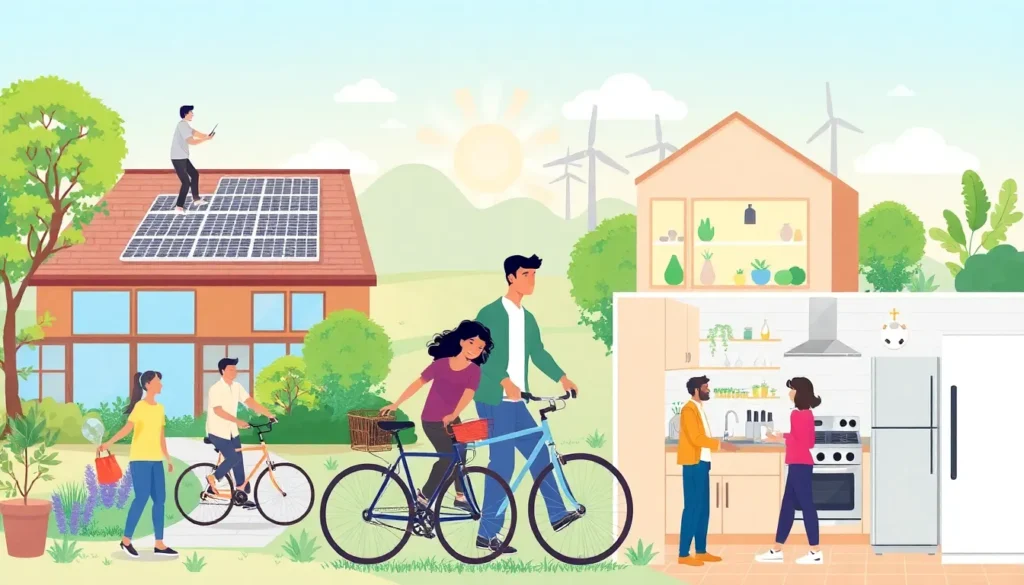
Implementing effective strategies for carbon footprint reduction impacts individuals and communities. The following approaches showcase actionable solutions anyone can adopt.
Energy Efficiency in Homes
Improving energy efficiency in homes lowers greenhouse gas emissions. Individuals can enhance insulation to minimize heating and cooling needs. Upgrading to Energy Star-rated appliances reduces energy consumption significantly. Using smart thermostats allows homeowners to monitor and control energy usage effectively. Switching to LED light bulbs can cut energy use by up to 75%. Moreover, utilizing renewable energy sources, such as solar panels, can offer sustainable solutions that further decrease reliance on fossil fuels.
Sustainable Transportation Options
Exploring sustainable transportation options drastically cuts carbon footprints. Biking and walking promote a healthier lifestyle while reducing emissions. Public transit systems provide an efficient way to travel with lower environmental impact. Carpooling with friends or colleagues lowers the number of vehicles on the road. Electric vehicles emit fewer greenhouse gases, making them a favorable choice. Adopting alternative fuels, such as biofuels, supports cleaner transportation methods. Embracing these practices leads to significant environmental improvements.
Role of Businesses in Carbon Footprint Reduction
Businesses play a crucial role in achieving carbon footprint reduction. Their actions directly influence environmental sustainability and community well-being.
Corporate Social Responsibility
Corporate social responsibility (CSR) focuses on integrating social and environmental concerns into business operations. Many companies now set clear goals for reducing greenhouse gas emissions. They engage in sustainable practices that benefit both their bottom line and the planet. Reports indicate that 92% of consumers prefer businesses that prioritize sustainability. This preference motivates companies to adopt practices that resonate with their customers, reinforcing brand loyalty. By choosing eco-friendly suppliers and materials, they not only lower emissions but also support a greener supply chain.
Implementing Green Practices
Implementing green practices significantly reduces carbon footprints in companies. Many organizations invest in energy-efficient technology, which lowers energy consumption and costs. Switching to renewable energy sources like wind and solar helps businesses minimize their carbon outputs. Strong waste management strategies also promote recycling and composting, leading to less landfill waste. Companies that embrace remote work options contribute to reduced transportation emissions. These collective efforts not only enhance operational efficiency but also create a sustainable workplace culture that inspires employees to engage in eco-friendly behaviors.
Individual Actions for Carbon Footprint Reduction
Individuals can make significant strides in reducing their carbon footprints through various actions. The following strategies focus on practical, everyday choices.
Sustainable Eating Habits
Eating locally sourced foods lowers transportation emissions. Choosing seasonal produce supports local farmers and reduces the carbon footprint associated with long-distance food transportation. Plant-based meals offer another path, as they typically require fewer resources than meat-based diets. Participating in community-supported agriculture (CSA) connects individuals directly with local food production while encouraging sustainable practices. Making conscious choices about food packaging also contributes by selecting items with minimal or no packaging.
Reducing Waste and Recycling
Minimizing waste is crucial for carbon footprint reduction. Adopting techniques like composting allows organic materials to decompose naturally, enriching soil while reducing landfill contributions. Utilizing reusable containers and bags instead of single-use plastics significantly cuts down on waste. Participating in recycling programs reduces the need for new materials, which often have higher carbon emissions associated with their production. Educating oneself and others about proper recycling practices further enhances community efforts toward a sustainable future.
Future of Carbon Footprint Reduction
Carbon footprint reduction faces promising advancements, with emerging strategies enhancing sustainability efforts. Evolving technologies and policy changes present significant avenues for making impactful contributions.
Technological Innovations
Innovations play a pivotal role in reducing carbon footprints. Renewable energy solutions, like solar and wind, have become more accessible, allowing individuals and businesses to power their operations sustainably. Electric vehicles are gaining popularity and efficiency, contributing to decreased transportation emissions. Smart home technologies optimize energy usage, further minimizing waste. Carbon capture and storage methods are continually developing, providing solutions for industrial emissions. Adoption of these innovations is vital for long-term sustainability and environmental health.
Policy Changes and Their Impact
Policy changes influence carbon footprint reduction significantly. Governments worldwide implement regulations to encourage lower emissions and promote sustainable practices. Renewable energy incentives motivate businesses to invest in green technologies, shifting energy grids toward sustainability. Carbon pricing frameworks hold polluters accountable, creating financial ramifications for high emissions. Collective global agreements, such as the Paris Agreement, drive nations to commit to emission reduction targets. Continued policy evolution fosters an environment supportive of innovative sustainability measures.
Reducing a carbon footprint isn’t just a personal responsibility; it’s a collective movement towards a sustainable future. Every small action contributes to a larger impact on the environment. By making informed choices and adopting eco-friendly practices, individuals and businesses can significantly lower their emissions.
Embracing sustainability can lead to a healthier planet and improved quality of life. As technology advances and awareness grows, there’s an opportunity for everyone to play a role in this vital effort. The journey towards a greener future is not only achievable but also rewarding, inspiring others to join in the quest for lasting change. Together, these efforts can create a positive legacy for generations to come.