
In a world drowning in plastic, biodegradable products are the superheroes we didn’t know we needed. They swoop in to save the day, breaking down naturally and giving Mother Earth a much-needed break from the relentless pile of waste. Imagine a life where your trash doesn’t outlive you—sounds like a dream, right?
These eco-friendly alternatives are not just good for the planet; they’re also a smart choice for anyone who wants to reduce their carbon footprint without sacrificing convenience. From compostable utensils to plant-based packaging, biodegradable products are here to make sustainability a whole lot easier—and a little more fun. So why not join the green revolution and give your trash can a new lease on life? Let’s explore the wonders of biodegradable products and how they can transform the way we consume.
Overview of Biodegradable Products
Biodegradable products provide a sustainable alternative to traditional plastic items. These items break down naturally through the action of microorganisms, returning to the ecosystem without leaving harmful residues. Many biodegradable products include materials like plant fibers, cornstarch, and even certain types of seaweed.
Compostable utensils, made from renewable resources, serve as a great example of how biodegradable options can replace single-use plastics. Plant-based packaging not only protects food but also minimizes environmental impact. Innovative companies continuously develop new materials that contribute to this eco-friendly movement.
The benefits of using biodegradable products extend beyond waste reduction. They help lower carbon emissions associated with manufacturing and disposal processes. Research indicates that shifting to biodegradable options can significantly decrease landfill contributions.
Adopting biodegradable products fosters a culture of sustainability. Consumers increasingly recognize the importance of supporting brands that prioritize environmental responsibility. Making conscious choices contributes to a larger effort in combating pollution and climate change.
Businesses that utilize biodegradable materials can enhance their brand image. Highlighting sustainable practices resonates with environmentally aware customers, creating brand loyalty. The transition to biodegradable products not only aids in waste management but also encourages others to follow suit, amplifying the positive impact on the planet.
Types of Biodegradable Products
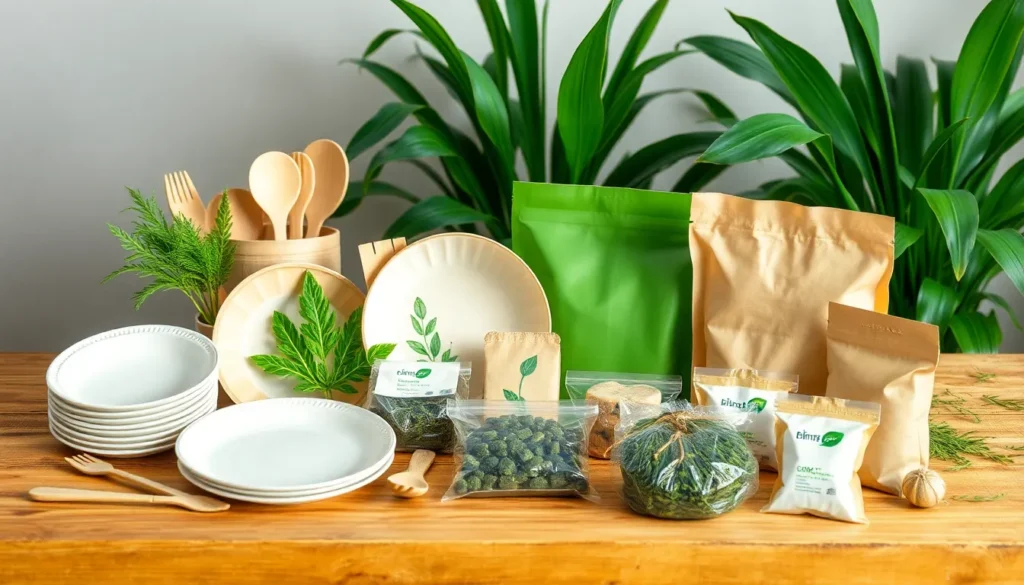
Biodegradable products come in various forms that cater to different needs. Understanding these types helps consumers make informed choices.
Natural Materials
Natural materials consist of organic substances that break down easily in the environment. Common options include products made from plant fibers, such as bamboo utensils and palm leaf plates. These items decompose through microorganisms, enriching the soil as they break down. Compostable bags made from cornstarch represent another popular choice, offering an alternative to traditional plastic bags. Additionally, seaweed-based packaging serves as a sustainable option, providing a biodegradable alternative for food storage. Each of these products emphasizes the importance of renewable resources, supporting eco-friendly practices and reducing waste.
Synthetic Materials
Synthetic materials, while man-made, can also be biodegradable with the proper formulation. Polyactic acid, commonly known as PLA, represents a notable example, deriving from corn starch and sugarcane. Such materials break down under specific composting conditions, reducing plastic pollution. Another type includes polyhydroxyalkanoates (PHAs), produced by bacteria. These biopolymers effectively decompose in various environments, both marine and soil. Innovations in synthetic biodegradable technology continue to expand options on the market, offering more sustainable choices for consumers. Products using synthetic biodegradable materials provide flexibility in design while still promoting environmental responsibility.
Benefits of Biodegradable Products
Biodegradable products offer numerous advantages, significantly impacting the environment and economy.
Environmental Impact
Biodegradable products contribute to waste reduction, breaking down through natural processes without leaving harmful residues. Microorganisms decompose these items, returning nutrients to the soil and enriching ecosystems. They help lower greenhouse gas emissions, minimizing the carbon footprint during both manufacturing and disposal. Utilizing plant-based materials lessens reliance on traditional plastics, which can linger in landfills for centuries. As consumers increasingly adopt these sustainable options, they drive demand for environmentally responsible practices, promoting a cleaner planet overall.
Economic Advantages
Biodegradable products benefit businesses by appealing to the growing market of environmentally conscious consumers. Companies using these items can enhance their brand image, fostering loyalty among eco-aware customers. Investing in biodegradable materials often leads to cost savings in waste management and disposal fees, making it financially viable. Additionally, as regulations around plastic usage tighten, businesses adopting biodegradable alternatives position themselves proactively within their industries. Embracing this approach can lead to innovative developments, opening new revenue streams while encouraging sustainable practices.
Challenges in Biodegradable Product Usage
Biodegradable products face several challenges that impact their widespread adoption and effectiveness.
Production Issues
Production of biodegradable products presents challenges. Manufacturing processes can be complex, often requiring new technologies and techniques. These methods frequently result in higher production costs compared to traditional plastics. Notably, sourcing raw materials such as corn or sugarcane can lead to food price fluctuations, affecting availability. Additionally, maintaining consistent quality across different batches proves difficult. Variability in factors like moisture content and material composition impacts overall product performance. Companies must invest in research and development to overcome these hurdles, yet the additional expenses can deter many businesses from entering the biodegradable market.
Consumer Awareness
Consumer awareness of biodegradable products remains limited. Many individuals lack understanding of how these items work and their environmental benefits. Additionally, misconceptions abound regarding disposal methods; not all biodegradable items decompose in typical landfill conditions. Education initiatives help bridge this gap, highlighting the importance of proper disposal and composting options. Labels on products often confuse buyers due to vague terminology. Fostering greater awareness through marketing campaigns and informational resources can enhance understanding and increase adoption rates. Brands committed to transparency foster trust among consumers seeking sustainable alternatives.
Future of Biodegradable Products
Emerging technologies are shaping the landscape of biodegradable products. Innovations in material science lead to the development of new biodegradable alternatives. For instance, researchers are exploring algae-based plastics that decompose efficiently, minimizing environmental impact.
Manufacturers are increasingly investing in biodegradable materials to meet rising consumer demand. Consumer preferences shift towards sustainable options, prompting businesses to adapt their offerings. Specific materials like polyhydroxyalkanoates (PHAs) are gaining traction due to their effective breakdown in various conditions.
Policies and regulations are influencing the future of biodegradable products. Governments worldwide are implementing strict regulations on single-use plastics. These moves promote the use of biodegradable alternatives, further driving market growth.
Integrating biodegradable products into everyday life expands accessibility and convenience. Increased availability of compostable packaging and utensils supports eco-friendly habits for consumers. Partnerships between brands and eco-conscious organizations foster innovation and awareness about sustainable practices.
Consumer education plays a vital role in the widespread adoption of biodegradable products. Communities need transparency regarding the benefits and proper disposal methods. Programs aimed at raising awareness will help alleviate misconceptions around these products.
The future reflects a significant commitment to sustainability through biodegradable alternatives. Ongoing research and collaboration among stakeholders pave the way for innovations. Prioritizing these eco-friendly choices can lead to a greener planet, benefiting all members of society.
Embracing biodegradable products is a crucial step toward a more sustainable future. These eco-friendly alternatives not only help reduce plastic waste but also promote healthier ecosystems. By choosing biodegradable options, consumers can support brands that prioritize environmental responsibility and contribute to the fight against pollution.
As awareness grows and innovations in material science continue, the adoption of biodegradable products is likely to increase. With the right education and transparency, individuals can make informed choices that align with their values. Ultimately, integrating these products into daily life paves the way for a greener planet and a more sustainable economy.